
How BMW ISTA Guided Diagnostics Save Workshops Time and Money
- Aadvik Smith
- Jul 7
- 3 min read

Misdiagnosis costs money. It's one of the most direct and painful profit drains a workshop can experience, and it happens most often when technicians are working from incomplete information or making educated guesses about complex electrical faults. BMW ISTA's guided diagnostic system was built specifically to address this problem, and workshops that understand and use it properly report significantly better first-time fix rates on BMW jobs.
What Guided Diagnostics Actually Means
When people talk about guided diagnostics in the context of BMW ISTA, they mean a structured, step-by-step diagnostic procedure that the software walks you through after reading an initial fault. Rather than presenting you with a code and leaving interpretation entirely to you, ISTA presents a test plan built from BMW's own diagnostic logic for that specific fault in that specific vehicle configuration.
The test plan asks specific questions, prompts you to perform specific measurements or activations, records what you find, and then adapts the next step based on your results. It's closer to a conversation with the vehicle's diagnostic architecture than a simple data read, and the result is a far more reliable path to identifying the actual root cause.
A Real Example of How the Process Works
Picture a BMW F30 with a stored fault in the engine management system related to the valvetronic system. A basic scan tool gives you the code, maybe a generic description, and leaves you to figure out the rest. Is it the motor? The sensor? A wiring issue? The eccentric shaft position? Without further structured guidance, you're looking at a significant diagnostic puzzle.
With BMW ISTA running through its guided procedure for this fault, the software checks the relevant live data values first to determine whether the issue is mechanical or electrical in nature. It then prompts specific measurements on the control circuit, checks adaptation values, and activates the valvetronic motor to observe its response. By the end of the procedure, you have a clear picture of which component has actually failed rather than a shortlist of possibilities.
The Time Saving Is Measurable
In a workshop environment, diagnostic time is directly linked to profitability. A complex BMW electrical fault that takes three hours to diagnose incorrectly, followed by a parts swap that doesn't fix it, followed by another two hours of renewed diagnosis, costs the workshop both in technician time and in parts that need returning. A correctly guided procedure that reaches the right answer in ninety minutes is a significantly better outcome by every measure.
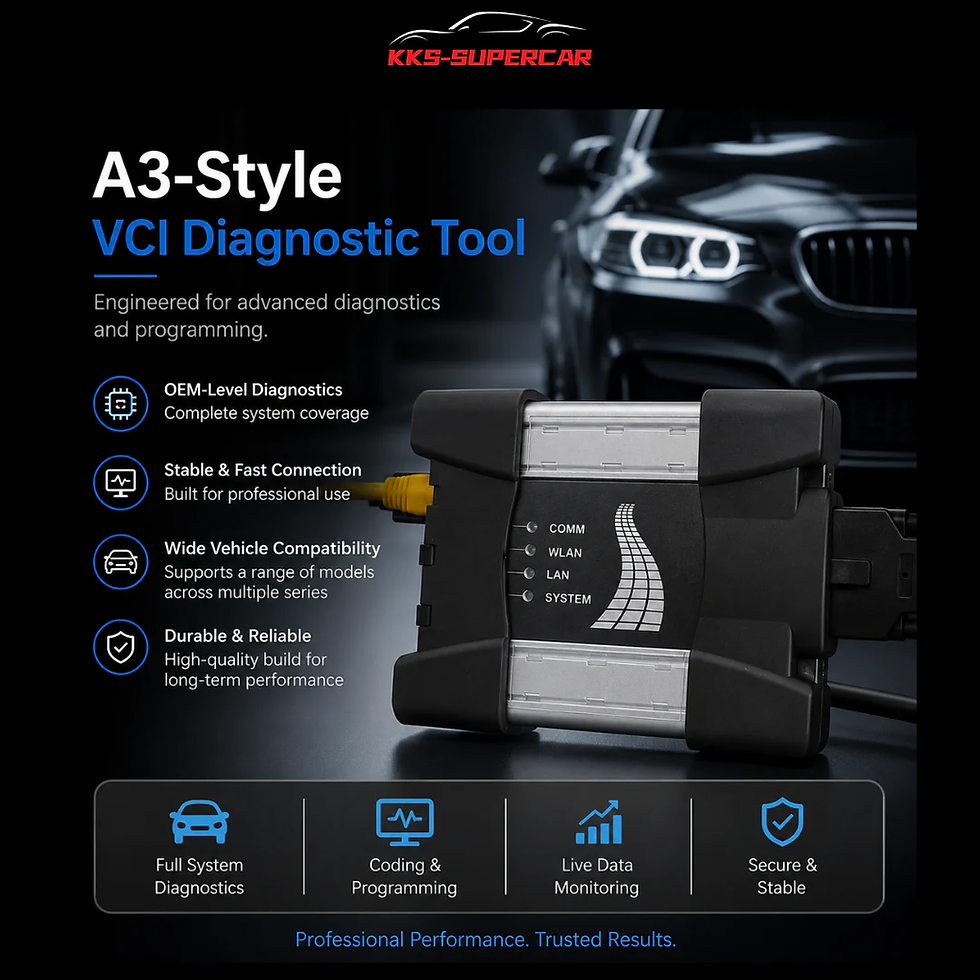
Workshops that invest in proper BMW ISTA setup typically report that the guided diagnostic capability alone justifies the investment within the first few months, simply through the reduction in wasted diagnostic time and unnecessary parts costs. The KKS Supercar A3-style complete package at $1,299 starts returning value quickly when considered against these real operational costs.
Beyond Fault Diagnosis: Service Procedures and Adaptations
ISTA's guided approach extends beyond fault diagnosis into service procedures. When you select a service function like throttle body adaptation, brake pad reset, or steering angle sensor calibration, ISTA walks you through the procedure step by step, confirming preconditions, monitoring relevant values during the procedure, and confirming successful completion at the end.
This is particularly valuable for technicians who perform these procedures less frequently. A guided ISTA procedure ensures the correct process is followed every time, reducing the risk of incomplete adaptations or missed steps that can cause ongoing issues.
Reducing Comeback Jobs
Comeback jobs are expensive in multiple ways. There's the direct cost of the additional labour, the potential parts costs if replacement components turn out not to have been the cause, and the reputational cost with the customer. ISTA's guided approach reduces comebacks by improving first-time accuracy. When the diagnostic conclusion is based on BMW's own structured test logic rather than an individual technician's interpretation of raw data, the result is more reliable.
Integration With Technical Service Information
ISTA integrates diagnostic guidance with access to technical service bulletins and repair documentation relevant to the specific vehicle and fault. This means that if BMW has issued updated repair procedures or identified a known pattern failure for the fault you're investigating, that information is surfaced through the platform rather than requiring a separate research step. For workshops, this integration saves additional time and ensures they're working from the most current information available.
Conclusion
BMW ISTA's guided diagnostic system is one of its most practically valuable features, and it's one that distinguishes it sharply from both generic scan tools and simpler BMW-compatible platforms. By following BMW's own diagnostic logic through structured, adaptive test procedures, technicians consistently reach accurate diagnostic conclusions faster and with fewer errors. For any workshop handling BMW work at any volume, that capability is not a luxury. It's a genuine operational asset that affects both profitability and customer satisfaction directly.


Comments